Reflexion Turns the Signal Space Foyer into Prague’s New #SelfieSpot
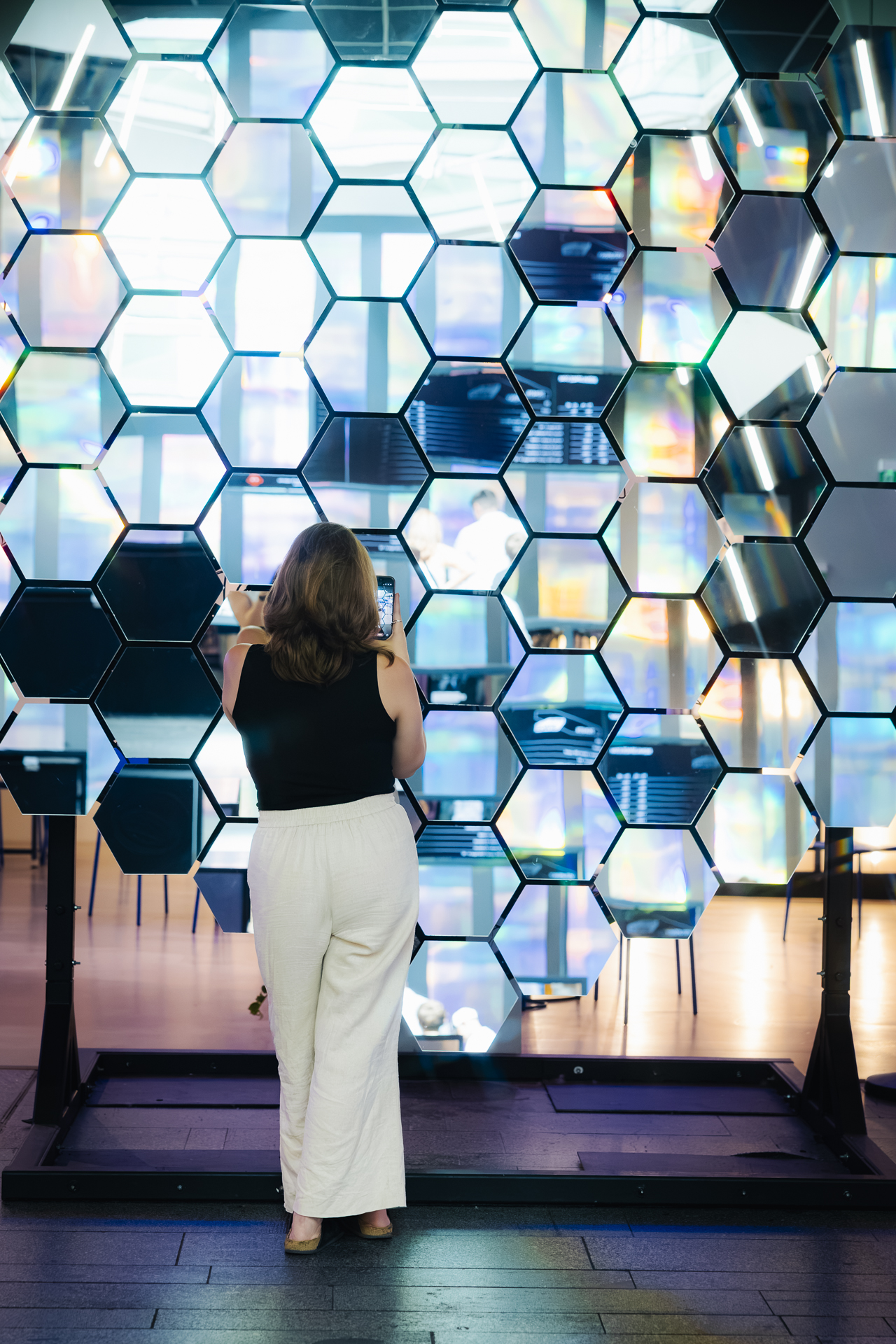
At first glance, it resembles a futuristic object composed of dozens of hexagonal shapes. But once the mirrors begin to move, the static surface transforms into a living image.
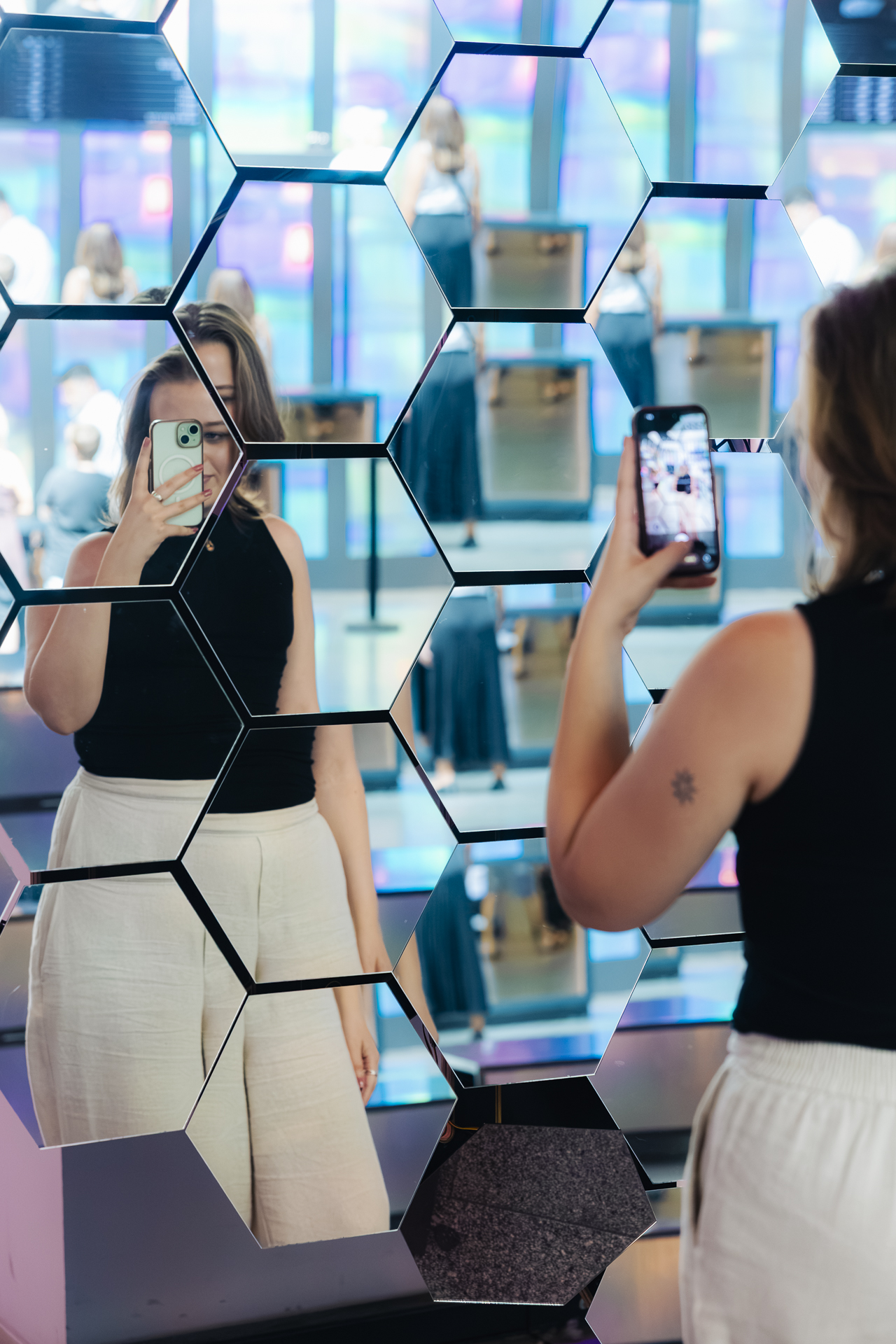
The reflection of the person standing in front of the installation fragments, multiplies and rearranges itself into new compositions. Each section captures a different angle, light and part of the surrounding space. The result changes from one second to the next and never looks exactly the same twice.
That is where the power of Reflexion lies. It does not simply demand to be looked at. It draws the visitor directly into the artwork.


From an Award-Winning Concept to a Technologically Complex Installation
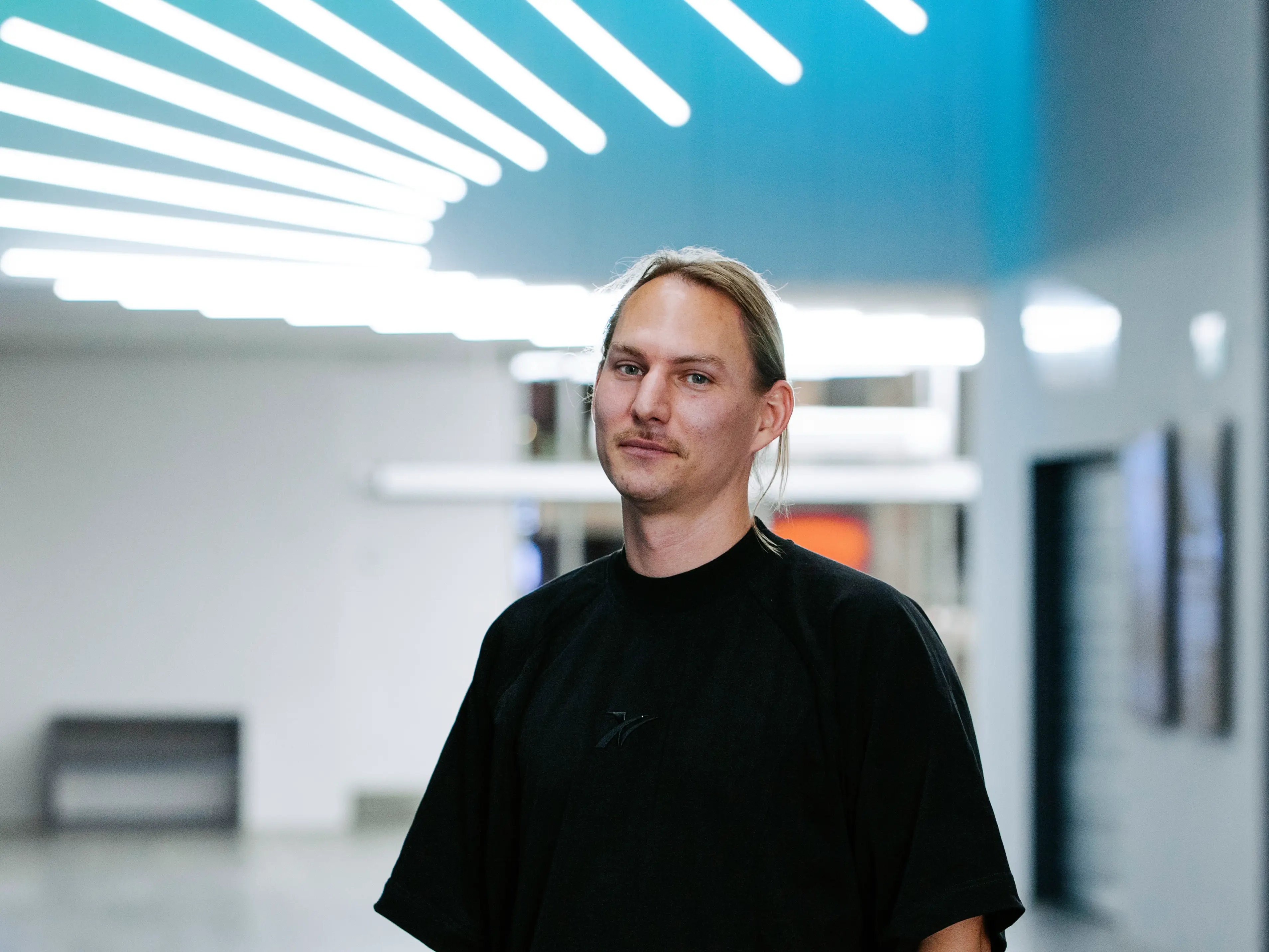
The installation was created by architects Adam Cigler and Petr Vacek. Reflexion was selected as the winning project of the Signal Calling open call for Signal Festival 2019, and its development was made possible with significant support from PrusaLab, Josef Průša’s prototyping workshop.
Over several months, the artists worked there on the structure, electronics, motion control and final form of the installation. Each of the 91 mirrors can tilt independently, while specially developed software controls their movement. It connects the installation’s mechanics with light and sound to create a precisely choreographed sequence.
The technology is not there simply to put itself on display. Its purpose is to make a solid material behave almost organically. At times, the mirrored wall resembles the surface of water; at others, it looks like a digital screen made from physical pixels.
An Artwork Completed by Its Audience
Reflexion works differently from an installation observed at a safe distance. Without anyone standing in front of it, it remains an impressive technological object. But it is the presence of the visitor that completes its meaning.
Every movement changes the resulting image. Step closer, move a few paces back or stand beside someone else, and the reflections begin to overlap. The boundaries between the figure, the surrounding space and the artwork itself gradually disappear.
In doing so, the installation quietly raises questions about how we perceive our own image and how easily it can change depending on the angle from which we view it.


A #SelfieSpot That Needs No Filter
Reflexion also has a less theoretical but highly photogenic quality: virtually every shot looks different.
The mirrors can turn a simple portrait into a futuristic mosaic, multiply a silhouette or dissolve it into the surrounding light. It is therefore no surprise that the installation is gradually becoming one of Prague’s most compelling #selfiespots.
Unlike a conventional photo wall, however, it does not offer a ready-made backdrop. The image only comes into existence in that particular moment, shaped by the movement of the mirrors, the light and the person standing in front of them.
Reflexion is also freely accessible in the Signal Space foyer, just a few minutes’ walk from Wenceslas Square.
Your Best Reflection Could Be a Winner
Signal Space is currently running a competition centred around the installation. Anyone who takes a photo at Reflexion and shares it on their profile can enter.
All you need to do is:
- take a photo of yourself at Reflexion,
- share it on your profile,
- add the hashtag #dreamon,
- tag @signalspaceprague.
Every 14 days, Signal Space will select one winner to receive a ticket to the gallery and a design gift.
The competition runs until 31 August 2026, and the full rules are available here.
A Mirror as a Machine for New Perspectives
Reflexion brings together disciplines that are often considered separately: architecture, mechanics, software, light, sound and contemporary art. Yet the result is not simply a demonstration of technology.
It is an object capable of changing, if only for a few minutes, the way a person sees themselves.
And perhaps of creating the best photograph from their visit to Prague.
Don't wait too long to visit. The Reflexion installation can be viewed and photographed in the Signal Space foyer only through September 13, 2026.


.jpg)